Severe hearing loss is not defined by an audiogram alone: the cause, speech understanding with hearing aids, cochlear anatomy, and auditory-nerve function all affect treatment decisions. By the end, you will know what a cochlear implant does, how candidacy is assessed, what surgery and rehabilitation involve, and which questions to ask during evaluation and long-term follow-up.
Key takeaways
- Cochlear implants bypass damaged hair cells and stimulate the auditory nerve.
- Speech understanding, hearing-aid benefit, and test results help determine candidacy.
- Bring hearing records, scans, device details, and medical history to evaluation.
- Plan for activation appointments, auditory rehabilitation, and long-term device care.
How a cochlear implant changes access to sound
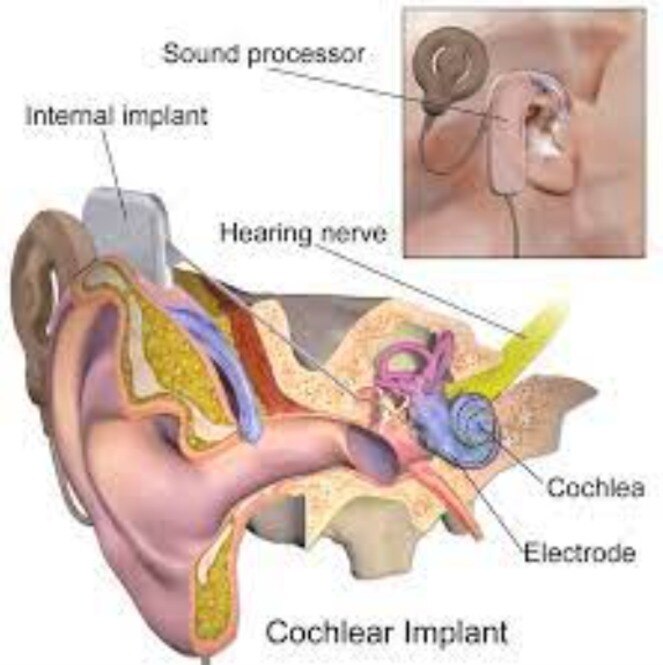
A cochlear implant bypasses damaged inner-ear hair cells instead of merely making sound louder. An external sound processor captures sound and converts it into coded signals; a transmitter sends them through the skin to the implanted receiver-stimulator. The receiver delivers those signals to an electrode array placed in the cochlea, which stimulates the auditory nerve.
| Device | How it works | Main limitation |
|---|---|---|
| Hearing aid | Amplifies incoming sound through the ear | Cannot repair severely damaged hair cells |
| Cochlear implant | Converts sound into electrical signals that stimulate the auditory nerve | Does not restore ordinary hearing |
A cochlear implant for severe hearing loss is evaluated mainly for severe-to-profound sensorineural hearing loss, including hearing loss in one or both ears, especially when correctly fitted hearing aids provide poor speech understanding. People searching for cochlear implant hearing problems for treatment should seek assessment rather than rely on decibel results alone.
- Conductive hearing loss and middle-ear blockage need separate diagnosis and treatment; implantation does not automatically treat them or every cause of deafness.
- Processed sound is initially unfamiliar, and outcomes vary. Some users gain speech understanding, while others gain sound awareness or stronger support from lip-reading.
- Electrode insertion can reduce usable residual hearing in the operated ear. Discuss existing hearing-aid benefit and hearing-preservation options before choosing surgery.
Why candidacy depends on speech understanding, not decibels alone
Candidacy depends on access to speech, not decibels alone. If you are researching cochlear implant hearing problems for treatment, expect a medical and functional assessment rather than a decision based on one audiogram.
- ENT examination to identify ear disease and confirm whether implantation is medically appropriate.
- Medical and hearing history, including the cause and duration of deafness, one- or two-sided loss, and previous treatment.
- A hearing-aid trial with fitting verification to show whether amplification has been properly adjusted and provides useful benefit.
- Unaided and aided pure-tone audiometry to measure hearing thresholds with and without hearing aids.
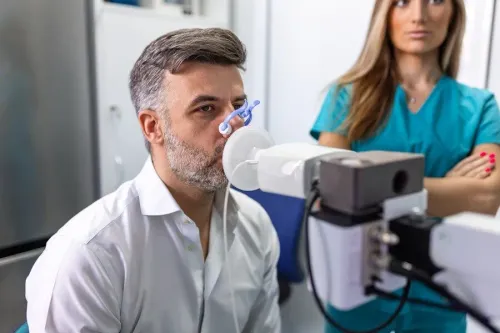
- Speech perception or speech-recognition testing while using hearing aids, which measures access to words and sentences.
- Tympanometry to check eardrum movement and middle-ear function.
- CT or MRI when indicated to examine the cochlea, inner-ear anatomy, and auditory nerve.
Two people can have similar thresholds but understand speech very differently. One may follow conversation with amplification; the other may hear loud sounds yet receive little usable speech information, so a hearing test alone cannot determine eligibility.
Clinicians also weigh residual hearing, communication goals, motivation, auditory-nerve function, and expected rehabilitation demands. Candidacy means the likely benefits and burdens, including surgical and treatment considerations, have been examined; it does not guarantee useful speech understanding.
What to bring to a cochlear implant evaluation in Pune
For a cochlear implant evaluation Pune appointment, bring:
- Previous audiograms and hearing-aid fitting records
- Hearing-aid repair, programming, and verification records
- Speech-testing reports
- Medical summaries, medication names, and allergy details
- Vaccination records
- Imaging discs and reports, including CT or MRI
- A written timeline of when hearing loss began
- Notes on its effects on school, work, telephone use, and conversations
The team may include an ENT surgeon, audiologist, speech-language therapist, radiologist, and rehabilitation or education specialists. Children also need developmental, language, family-support, and educational assessment.
| Stage | What happens | Possible contributors |
|---|---|---|
| History and examination | Ear examination and review of hearing history | ENT surgeon |
| Functional testing | Hearing-aid testing, speech perception, and middle-ear testing | Audiologist, speech-language therapist |
| Imaging | CT or MRI when the cochlea, inner ear, or auditory nerve needs assessment | Radiologist, ENT surgeon |
| Planning | Communication goals and alternatives are discussed | Entire multidisciplinary team |
Children with congenital or early-onset hearing loss need prompt referral because consistent access to sound supports language development. For adults, age alone does not exclude implantation, although long auditory deprivation can make adaptation harder.
Ask a specialist ENT centre how to arrange the assessment and which tests must be repeated. Take a communication partner or school representative when that person can describe everyday difficulties accurately.
What surgery, activation, and rehabilitation require
After the decision, implantation takes place under general anaesthesia. The surgeon places the internal receiver-stimulator beneath the skin behind the ear and inserts the electrode array into the cochlea. A cochlear implant for severe hearing loss is not activated immediately; the wound needs time to heal before the external processor is fitted and switched on.
Ask the treating surgeon about your own recovery time, activity restrictions, anaesthesia plan, hearing-preservation approach, and individual risks. Do not rely on a fixed online timeline. Informed consent should cover:
- Infection, bleeding, dizziness, and taste disturbance
- Facial-nerve injury and cerebrospinal-fluid leak
- Device failure and limited hearing benefit
- Loss of residual hearing in the operated ear
Review age-specific vaccination status with the clinical team before surgery, including protection against pneumococcal meningitis. Activation is followed by mapping, repeated programming, listening practice, speech-language therapy, and device-use coaching.
| Area | Children | Adults |
|---|---|---|
| Language and listening | Sustained listening, speech-language, and educational support help build developing language skills. | Structured auditory training helps the brain interpret sound after prolonged deprivation. |
| Follow-up | Families support daily device use, appointments, and school communication. | The user practises device use for conversations, work, telephones, and environmental sounds. |
| Expectations | Earlier access to sound supports development, but progress varies. | Age alone does not exclude implantation; years without clear sound can make adaptation harder. |
Rehabilitation is part of treatment, not an optional add-on.
How to judge safe, practical long-term cochlear implant care
Choose ongoing cochlear implant hearing care Pimpri Chinchwad by confirming who will manage the device after activation, not only who performs surgery. Ask for written answers to these points:
- Who provides mapping during the first months and later?
- Who handles processor faults, batteries, charging, replacements, and maintenance?
- How are rehabilitation referrals arranged, and who responds to sudden hearing changes, wound concerns, dizziness, or suspected device failure?
- What emergency number covers evenings and weekends?
- How will the team support a child’s school access or an adult’s workplace communication?
MRI safety depends on the implant model. Before booking an MRI, keep your implant identification card available and tell the imaging department about the device. Confirm the permitted field strength, required precautions, and whether the scan needs a head wrap, special protocol, or magnet management.
Compare local services on the points that affect long-term safety:
| Service point | What to compare | Why it matters |
|---|---|---|
| Named clinicians | ENT surgeon, audiologist, rehabilitation staff | Responsibilities stay clear |
| Mapping access | In-person and urgent programming appointments | Poor settings can limit speech access |
| Imaging coordination | Implant-record review before MRI | Prevents unsafe bookings |
| Risk discussion | Surgeon-led explanation of complications | Consent reflects your situation |
| Follow-up | Ongoing ENT and audiology access | Problems receive timely review |
Dr. Ajay Kothadiya’s ENT Clinic - ENT Specialist, ENT Surgeon & Endoscopic Surgeon in Pune can be compared with other Pimpri-Chinchwad services using this checklist. Choose coordinated care that continues after activation.
Related service
Cochlear Implant Hearing Problems Cochlear Implant Hearing Problems ₹600 Cochlear implants can improve hearing in people with severe hearing loss who are no longer helped by using hearing aids. View service → |
Frequently asked questions
How does a cochlear implant address serious hearing problems?
It bypasses damaged inner-ear hair cells and sends coded electrical signals to the auditory nerve through an electrode array in the cochlea.
Why are decibel levels alone not enough for cochlear implant candidacy?
Candidacy also depends on speech understanding, hearing-aid benefit, the condition of the auditory nerve, medical findings, and communication goals.
What should you bring to a cochlear implant evaluation in Pune?
Bring previous audiograms, hearing-aid records, imaging reports, medication details, medical history, and questions about surgery, costs, and rehabilitation.
What do surgery, activation, and rehabilitation involve?
Care includes surgical placement, a later activation appointment, processor programming, listening practice, follow-up mapping, and auditory rehabilitation.
How can you judge safe, practical long-term cochlear implant care?
Check whether the care plan includes candidacy testing, surgical counselling, device programming, rehabilitation, complication guidance, and accessible follow-up.