The right choice depends on more than the hearing-loss label or the newest processor. Your pattern of loss, speech understanding with hearing aids, inner-ear anatomy, auditory-nerve function, health, age and rehabilitation goals determine whether unilateral, bilateral, sequential, bimodal or hybrid treatment deserves consideration.
Key takeaways
- Choose implantation based on hearing pattern, speech scores, anatomy and communication goals.
- A cochlear implant evaluation measures hearing, speech recognition, anatomy and everyday communication needs.
- The internal implant stays under the skin; you replace or upgrade the external processor.
- Compare hearing aids, bone-conduction devices and other options before deciding on surgery.
Match the implantation strategy to your hearing pattern
The answer to which cochlear implant is best for hearing problems is not a device model; it is a strategy matched to your hearing pattern, speech-recognition results, age, anatomy and communication goals.
| Option | Best fit | Main consideration |
|---|---|---|
| Unilateral implantation | Bilateral severe-to-profound sensorineural loss when one ear is clearly poorer, or one-sided deafness | Preserves the better ear for hearing-aid use, but provides less binaural benefit |
| Simultaneous bilateral implantation | Severe-to-profound loss in both ears, especially with limited hearing-aid speech benefit | Offers two-ear input at once; age, surgical fitness and rehabilitation capacity matter |
| Sequential bilateral implantation | Progressive loss, or a person who first receives one implant and later needs the other | The better ear, duration of deafness and first implant’s speech results guide timing |
| Bimodal hearing | One cochlear implant plus a hearing aid in the other ear | Keeps acoustic access in the hearing-aid ear; benefit depends on usable residual hearing and speech understanding |
For single-sided deafness or asymmetric loss, implantation can reduce head-shadow effects and improve speech in noise or sound localisation. A long-deaf ear, congenital deafness, poor auditory-nerve function or limited rehabilitation access can reduce benefit; the better ear and your communication goals remain central.
If low frequencies remain useful but high-frequency speech access is poor, a hybrid or electro-acoustic strategy can amplify low frequencies acoustically while stimulating high frequencies electrically. It requires suitable audiometry and electrode placement, and surgery can permanently reduce or eliminate residual hearing.
Children with congenital deafness need early, age-appropriate planning because auditory deprivation affects language development. Adults weigh work, telephone use, group communication and rehabilitation time differently; no single choice suits every cochlear implant hearing problem.
What a cochlear implant evaluation actually measures
Candidacy is decided before anyone chooses an implant model or surgical plan. A cochlear implant evaluation in Pune, like an evaluation elsewhere, asks whether an implant can improve your access to communication—not merely whether an audiogram shows cochlear implant hearing problems.
1. An audiologist records unaided pure-tone thresholds, then repeats testing with appropriately fitted hearing aids. Aided speech-recognition testing shows how well you understand words or sentences with amplification. Limited benefit from correctly fitted hearing aids matters more than the audiogram alone.
2. The team performs tympanometry, examines the ear and eardrum, reviews infections, surgeries, medicines and other medical history, and discusses your communication goals. Assessments of cognitive ability, general medical fitness and rehabilitation readiness identify barriers to surgery or learning a new signal.
3. One speech score just above or below a commonly quoted cutoff does not settle candidacy. Test method, hearing-aid fitting, language, age and the centre’s criteria all affect interpretation.
4. For a child, the evaluation includes developmental age, aided access to speech, language progress, family goals and available auditory habilitation. The audiologist and ENT surgeon interpret these findings together.
5. CT can show cochlear malformation or ossification; MRI assesses the internal auditory canals and cochlear nerve. An absent or severely deficient auditory nerve can make an implant ineffective, prompting discussion of specialised alternatives rather than a different processor.
Compare the internal implant with the external sound processor
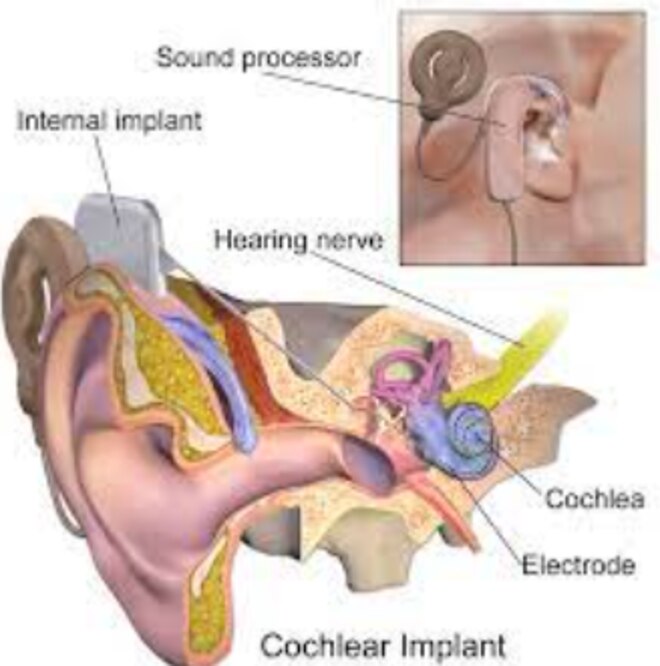
The internal implant and external sound processor are separate parts of the system. A receiver-stimulator sits beneath the skin, while an electrode array lies inside the cochlea; the removable processor captures sound and sends coded signals across the skin.
This cochlear implant types comparison matters because processor convenience cannot overcome absent auditory-nerve function, prolonged auditory deprivation, a poor electrode-neural interface or inadequate rehabilitation.
| Design | Strengths | Trade-offs |
|---|---|---|
| Behind-the-ear | Familiar controls, replaceable parts and broad accessory support | More visible; retention may need clips or headbands |
| Off-the-ear | Lower profile and less weight behind the ear | Battery capacity, controls and accessory support vary by model |
Check these details before choosing among cochlear implant options for hearing loss:
- Rechargeable batteries reduce daily battery handling; disposable cells help during travel or when charging is unavailable.
- Confirm the water-resistance rating. Swimming requires a manufacturer-approved waterproof accessory, not ordinary exercise protection.
- Check telecoil, Bluetooth smartphone streaming, telephone performance and compatibility with remote microphones.
- Ask how directional microphones and noise-management settings perform in restaurants, classrooms and cars.
- For children, test retention options such as headbands, clips and safety cords.
- Compare charging routines with exercise, travel and battery availability in your area.
- Confirm support for current and future accessories; a newer processor is not automatically compatible with an older implant.
- Verify MRI conditions for the exact implant model before every scan using its identification card and current manufacturer instructions. “MRI compatible” is not universal.
Set realistic expectations and compare alternatives before surgery
Activation follows healing, then mapping sets electrical levels for each electrode. The first sound often seems mechanical, sharp, or unfamiliar—not normal hearing. An implant converts sound into electrical stimulation, unlike a conventional hearing aid, which amplifies sound.
Progress comes through daily listening practice, auditory training, gradual programming adjustments, and regular follow-up until performance stabilises; speech in noise and telephone use remain variable.
Before choosing, compare alternatives against anatomy, auditory-nerve function, and your hearing pattern:
| Option | Best fit to discuss | Important limitation |
|---|---|---|
| Powerful hearing aid | Residual hearing and usable aided speech | Limited benefit when severe loss persists |
| Bone-conduction device | Conductive or mixed loss, or selected single-sided loss | Does not restore cochlear-nerve function |
| Middle-ear implant | Selected sensorineural loss with suitable anatomy | Requires surgery and specific candidacy |
| Auditory brainstem implant | Absent or severely deficient auditory nerve | Speech outcomes are less predictable |
| Cochlear implant | Severe-to-profound loss with poor hearing-aid benefit | Requires surgery and rehabilitation |
Surgery can permanently reduce residual hearing. Discuss dizziness, tinnitus changes, infection, device failure or revision surgery, facial-nerve injury, and the small risk of meningitis; obtain age-appropriate pneumococcal vaccination advice before implantation.
A cochlear implant types comparison should cover unilateral, simultaneous bilateral, sequential bilateral, and bimodal use—an implant in one ear with a hearing aid in the other. People researching cochlear implant hearing problems should weigh duration of deafness, the better ear, age, congenital or progressive loss, and communication goals.
A hybrid electro-acoustic option preserves low-frequency acoustic access while stimulating high frequencies, but surgery can eliminate that residual hearing.
Use a team-based checklist when choosing care in Pune
Compare a cochlear implant evaluation in Pune with another city by testing the team, not the processor advertisement. Ask whether one service coordinates an audiologist, ENT surgeon or otologist/neurotologist, radiology support, speech-language or auditory rehabilitation, paediatric developmental support when needed, and long-term programming.
The question which cochlear implant is best for hearing problems should follow documented anatomy, speech access and continuing support—not a claim about the newest model.
| Check | Request | Why it matters |
|---|---|---|
| Aided testing | Speech scores with hearing aids and complete audiograms | Shows usable speech access |
| Imaging | CT or MRI findings and cochlear-nerve assessment | Identifies anatomy and nerve limitations |
| Planning | Expected benefit and rehabilitation schedule | Sets measurable goals after activation |
Before agreeing to surgery, ask for:
- The exact MRI field-strength conditions and scanning rules for the proposed implant.
- The device-failure policy, revision-surgery arrangements and who manages complications.
- Accessory compatibility, including remote microphones, telephone connections and smartphone systems.
- Age-appropriate pneumococcal vaccination advice.
- One written total cost covering surgery, processor, mapping, programming and follow-up.
Dr. Ajay Kothadiya’s ENT Clinic - ENT Specialist, ENT Surgeon & Endoscopic Surgeon in Pune can provide a place to discuss ear, sinus, hearing and surgical concerns with an ENT specialist. Choose the service that documents its evaluation and supports rehabilitation for years, rather than the centre making the strongest processor claim.
Related service
Cochlear Implant Hearing Problems Cochlear Implant Hearing Problems ₹600 Cochlear implants can improve hearing in people with severe hearing loss who are no longer helped by using hearing aids. View service → |
Frequently asked questions
How do you match a cochlear implant strategy to a hearing pattern?
Match the strategy to the type and duration of hearing loss, speech-recognition scores, one- or two-sided involvement, anatomy and communication goals.
What does a cochlear implant evaluation measure?
It measures hearing thresholds, speech recognition with hearing aids, ear health, cochlear anatomy, medical suitability and communication needs.
What is the difference between the internal implant and external sound processor?
The internal implant is placed under the skin and sends signals to the auditory nerve. The external processor captures sound, processes it and transmits signals through the skin.
What alternatives should you compare before cochlear implant surgery?
Compare appropriately fitted hearing aids, assistive listening technology, bone-conduction devices and other hearing strategies when they suit your hearing pattern and goals.