Nasal congestion, sneezing, facial pressure and postnasal drip during Pune’s changing seasons often come from allergy or irritation rather than an infection. You will be able to match your symptom pattern and timeline to sensible home care, a routine ENT appointment, or urgent medical assessment.
Key takeaways
- Clear discharge and itching usually point to allergy, not bacterial infection.
- Book an ENT appointment for symptoms lasting over 10 days or repeatedly returning.
- Use saline rinses safely; stop self-treatment for severe pain, swelling or vision changes.
- Specialist treatment comes before surgery when medicines fail or blockage keeps recurring.
Is it seasonal allergy, irritation or a sinus infection?
Itching in the nose or eyes, repeated sneezing, and clear, watery discharge point toward allergic rhinitis rather than infection. Pollen, dust, weather changes and air pollution can trigger it. Irritation usually causes burning, dryness or sneezing after exposure and improves when the trigger stops; thick or discoloured mucus alone does not prove a bacterial infection.
Patterns that deserve an ENT assessment include:
- Repeated attacks after temporary recovery, suggesting recurrent acute sinusitis rather than one seasonal flare.
- Persistent one-sided blockage, reduced smell or visible swelling, which can occur with nasal polyps or a deviated septum.
- Marked facial pressure that does not match your usual allergy pattern, especially when migraine-related facial pain is possible.
- Symptoms that continue beyond the season or keep returning despite appropriate allergy treatment.
Chronic rhinosinusitis means symptoms lasting at least 12 weeks. Symptoms alone are not enough; nasal endoscopy or a CT scan must show objective inflammation to support that diagnosis.
An ENT surgeon for seasonal sinus problems in Pune becomes useful when symptoms return in the same season, disrupt sleep or work, or remain uncontrolled. Recurrent or unusually severe symptoms also justify review for asthma, aspirin-exacerbated respiratory disease and nasal polyps, because these conditions can change treatment and follow-up.
How long should you wait before booking an ENT appointment?
Home care is reasonable for a mild, familiar seasonal flare that is improving and has no red flags. Book an ENT appointment if congestion, facial pressure, reduced smell, postnasal drip or cough continues after the season, lasts beyond about 10 days without improvement, or worsens after initial improvement.
| Timeline | What it suggests | What to do |
|---|---|---|
| Improving within 10 days | Familiar allergy or irritation | Continue careful home care |
| At least 10 days without improvement | Possible acute bacterial rhinosinusitis pattern | Arrange an ENT review |
| Improves, then worsens | Possible bacterial complication | Arrange an ENT review |
| Fever of at least 39°C with purulent discharge or facial pain for 3–4 consecutive days | Severe illness pattern | Seek prompt medical assessment |
These patterns do not mean every episode needs antibiotics. For an uncomplicated adult with reliable follow-up, watchful waiting is an option; treatment decisions depend on examination and the course of illness. An ent surgeon for sinus issues can help when symptoms persist or recur.
Arrange prompt assessment for persistent one-sided blockage, a visible unilateral mass, smell that does not recover, repeated nosebleeds or bleeding, or symptoms unlike ordinary allergy.
Contact a sinus specialist in Pune urgently for swelling or redness around an eye, double or reduced vision, severe one-sided facial pain, marked facial swelling, severe frontal headache, stiff neck, confusion, or rapidly worsening illness.
Which home treatments are safe, and when should you stop self-treatment?
For mild, familiar seasonal sinus problems in Pune, reduce exposure first: keep windows closed during heavy dust or pollution, shower after being outdoors, and avoid known pollen or smoke triggers.
An intranasal corticosteroid can help allergic inflammation when used correctly and consistently; it works more slowly than an instant-relief decongestant spray, so occasional doses will disappoint.
| Option | What it does | Safe use |
|---|---|---|
| Saline spray | Moistens the nose with a small volume | Use for dryness or mild irritation |
| High-volume saline rinse | Flushes mucus and allergens through the nasal passages | Use distilled, sterile, or previously boiled and cooled water; never untreated tap water |
| Oxymetazoline or similar spray | Opens a blocked nose quickly | Limit to the product’s short-term course, commonly no more than three consecutive days |
Wash an irrigation device after every use and let it air-dry according to the manufacturer’s instructions. Longer decongestant use can cause rebound congestion, called rhinitis medicamentosa. Do not self-start antibiotics, oral steroids, or repeated decongestants without an examination.
Stop self-treatment and arrange review with an ENT surgeon for sinus issues if symptoms last beyond about 10 days, continue after the season, worsen after improving, or repeatedly disrupt sleep or work. Seek prompt care for eye swelling, vision changes, severe one-sided pain, high fever, confusion, stiff neck, or rapidly worsening illness.
Disclose pregnancy, hypertension, glaucoma, thyroid disease, and every current medicine before using nasal or oral treatments.
What happens during an ENT assessment in Pune?
An appointment gives you a diagnosis-led plan, not an automatic scan or operation. An ENT clinician will ask when symptoms began, whether they return in a particular season, what triggers them, and how they affect sleep and work. Tell them about fever, allergy symptoms, asthma, medication sensitivity, and previous treatment.
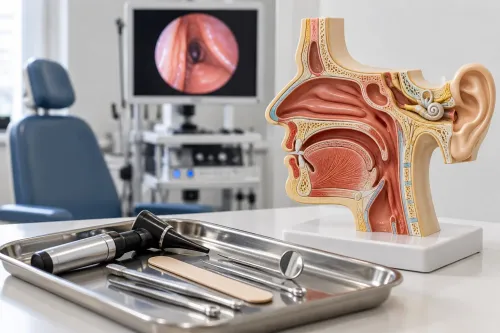
The assessment includes examination of your nose and throat, a review of medicines, and discussion of allergy or pollution exposure. The clinician will also consider alternatives such as migraine-related facial pain, nasal polyps, a deviated septum, or recurrent sinus disease.
| Test | What it involves | When it applies |
|---|---|---|
| Nasal endoscopy | A small camera examines the nasal passages | Persistent, recurrent, one-sided symptoms, suspected polyps or blockage, or poor response to treatment |
| Thin-cut sinus CT | Detailed images of sinus cavities and drainage pathways | Chronic or recurrent disease, anatomical obstruction, complications, or surgical planning |
| No immediate imaging | Examination and symptom-led treatment | A first uncomplicated acute episode |
Nasal endoscopy is not automatic for every seasonal flare-up, and CT is not routine for a first uncomplicated acute episode. CT findings need comparison with your symptoms because incidental mucosal thickening is common.
For history-led assessment and appropriate escalation, Dr. Ajay Kothadiya’s ENT Clinic - ENT Specialist, ENT Surgeon & Endoscopic Surgeon in Pune can help assess whether you need examination, endoscopy, or imaging. A sinus specialist in Pune should reserve scans and surgery for findings that change management.
This is the practical value of seeing an ent surgeon sinus in Pune rather than repeating self-treatment.
Related services
Sinus Endoscopy Sinus Treatment in medical fraternity involves the precise removal of diseased sinus tissue with improvement in the natural drainage channels by the... View service → |
ENT Specialist Being the eminent name in the medical field, Dr. Ajay Kothadiya provides the best treatment for ear, nose & throat diseases & disorders. View service → |
When does a seasonal sinus problem need specialist treatment or surgery?
Many allergic or inflammatory complaints improve with consistent saline irrigation, trigger control and an appropriately selected intranasal corticosteroid. Use these treatments regularly as directed; unlike instant-relief decongestant sprays, corticosteroids need time to work.
An ENT surgeon for seasonal sinus problems in Pune becomes useful when symptoms remain troublesome after an adequate medical trial, recur often enough to disrupt sleep or work, or suggest a condition medicines alone will not correct.
- Arrange specialist review for persistent reduced smell, facial pressure, postnasal drip or blockage after the season ends.
- Discuss further treatment if examination finds nasal polyps, a deviated septum, obstructed drainage pathways or another structural problem.
- Ask an ENT surgeon for sinus issues to assess recurrent disease rather than repeatedly self-treating each flare.
Endoscopic sinus surgery is generally considered only when chronic rhinosinusitis has objective inflammation on endoscopy or CT and remains uncontrolled despite appropriate medical treatment. Surgery may also be necessary for obstructive polyps, complications or a structural problem. It is not routine treatment for occasional seasonal congestion.
Mucus colour alone does not prove a bacterial infection; antibiotics require a clinical decision. Bypass a routine appointment for eye swelling or redness, vision changes, severe frontal headache, stiff neck, confusion, marked facial swelling or rapidly worsening illness.
Improving, familiar allergy symptoms can be managed carefully at home; persistent or recurrent symptoms deserve a scheduled ENT review; eye, neurological or rapidly worsening symptoms need urgent assessment.
Frequently asked questions
How can you tell seasonal allergy, irritation and a sinus infection apart?
Itching, repeated sneezing and clear watery discharge point toward allergic rhinitis. Burning or dryness after a clear exposure suggests irritation. Thick or discoloured mucus alone does not prove a bacterial infection; persistent symptoms, facial pain, fever or worsening after initial improvement need medical assessment.
How long should you wait before booking an ENT appointment for sinus problems?
Book an ENT appointment when symptoms last more than 10 days, worsen after initial improvement, recur through the season, or interfere with sleep, work or breathing. Seek urgent care for eye swelling, vision changes, severe headache, neck stiffness or confusion.
Which home treatments are safe for seasonal sinus problems?
Saline nasal spray or a properly prepared saline rinse can reduce mucus and allergens. Use distilled, sterile or previously boiled and cooled water for rinses, and clean the device after use. Avoid inserting cotton buds and do not use decongestant nasal sprays for more than three consecutive days.
What happens during an ENT assessment in Pune?
The ENT specialist reviews your symptom pattern, triggers, medicines and previous infections, then examines your ears, nose and throat. Nasal endoscopy may identify swelling, polyps, a deviated septum or drainage. The findings guide allergy treatment, medication, further testing or referral for surgery.
When do seasonal sinus problems need specialist treatment or surgery?
Specialist treatment is appropriate when symptoms persist, recur frequently, or fail to improve with correctly used medical treatment. Surgery is considered when structural blockage, nasal polyps or chronic sinus disease continues despite appropriate non-surgical care; an ENT surgeon for sinus issues decides after examination and, when needed, a CT scan.
Related service
ENT Surgeon & Endoscopist Dr. Ajay Kothadiya specializes in performing surgeries to cure nose, ear and throat ailments. View service → |